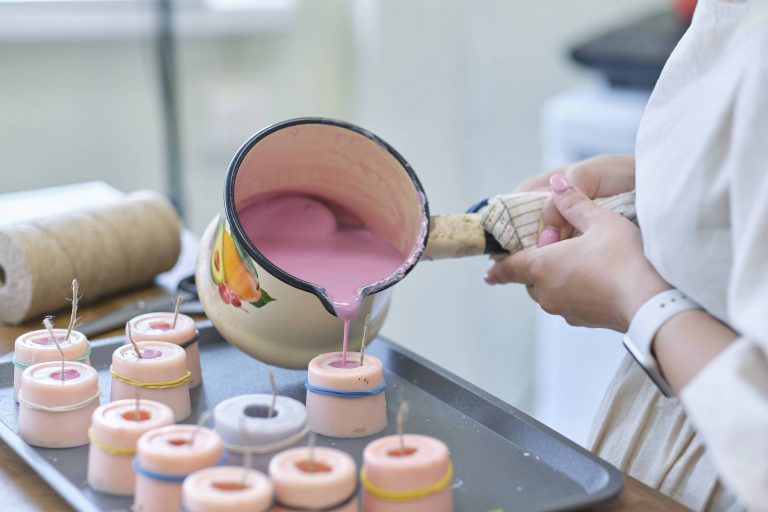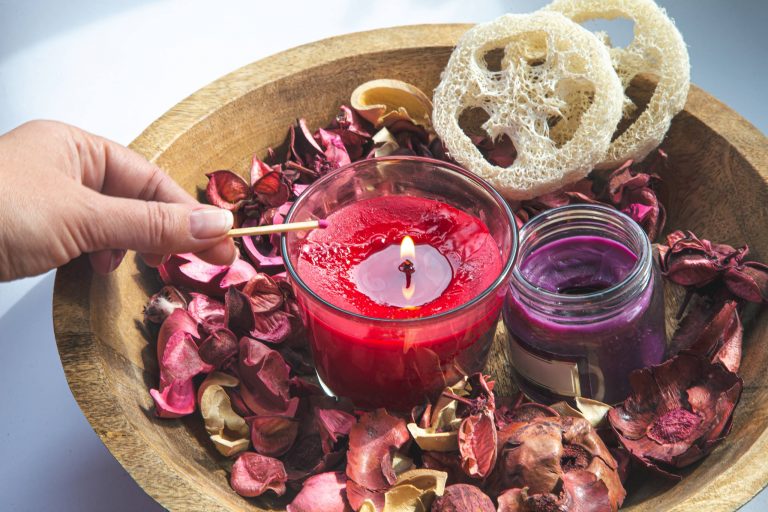
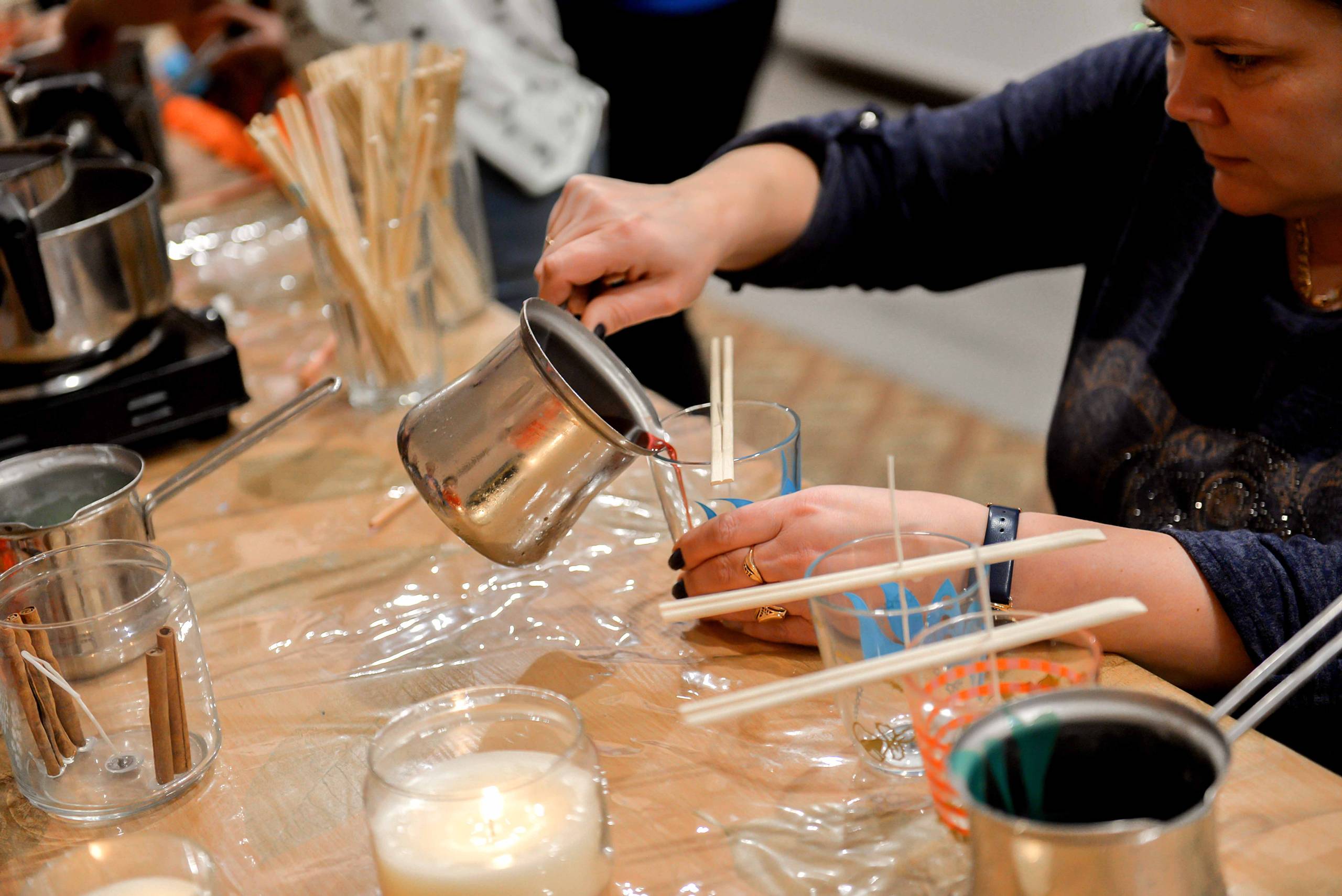
Fragrance is a vital part of the candle craft experience. Not only does it determine the ambiance of a candle, but it can evoke emotions, transport our minds to another time and place, and become an integral part of our surroundings. Scent has the power to affect how we perceive and feel about our environment, partly because it doesn’t just appeal to our sense of smell, but also directly to our brains, unlike what we see or hear. Whenever I am working on a new fragrance, I am reminded that sometimes the things we can’t see, the things that aren’t necessarily tangible, can have a greater impact than those that we can see.
When creating a new fragrance, it is much like telling a story. Every fragrance has top notes, middle notes, and base notes. The top notes are the first thing we smell and provide a top note accord that usually gives a fresh, green, or citrus character to a fragrance. Middle notes, or the heart of the fragrance, emerge after the top notes dissipate. They usually give a floral, spicy, or fruity character to a fragrance. Base notes are the main theme of the fragrance and bring depth and richness to a fragrance. These are the notes that linger the longest after the fragrance has been applied. Some of my favorite base notes are vanilla, amber, and musk. I also love experimenting with unique fragrance combinations that provide interesting and complex base notes, such as birch tar, star anise, and leather.
The type of fragrance used in a candle can also define the personality of the space in which it will be burned. For example, a calming fragrance such as lavender might be better suited for a bedroom, while an uplifting citrus fragrance might be more appropriate for a kitchen or dining area. I have found that after burning a fragrance in a particular location for an extended period of time, it is hard to burn another fragrance in that same location because I have grown so accustomed to associating that particular scent with that particular space.
Working with different fragrances requires a bit of patience because the strength and throw of a particular fragrance can vary greatly depending on the type of wax you are using, the melting point of the wax, the amount of fragrance oil used, and the environmental conditions under which the candle is burned. For example, some fragrance oils smell wonderful out of the bottle, but when added to melted wax, the throw is barely detectable. Other fragrances smell terrible out of the bottle, but smell wonderful in a melted pool of wax. Some fragrances will change character altogether when subjected to heat. For example, some floral fragrance oils that smell like a bouquet of flowers out of the bottle will give off a single floral note, like rose, when melted in wax.
This experimental process is important to the creative process because it allows me to continue to discover new things about fragrance and wax. There is nothing worse than pouring all your time, money, and energy into something only to have it fail because you didn’t test it properly. After burning and testing a new fragrance, I can continue to adjust it until I get it just right. This is all part of the fun and journey of creating something new and different.